
Walk into a café today and you may notice something different. People are not simply sitting down for a cup of coffee or a quick meal. They are taking photographs, recording reels, working on laptops, meeting friends, celebrating small moments, and sharing their experience online.
This is the world of the aesthetic café.
For Gen Z, cafés have become much more than places to eat and drink. They are social spaces, creative environments, photo locations, workspaces, and places where people can express their personality. From carefully designed interiors and beautiful coffee presentations to cozy lighting and Instagram-worthy corners, aesthetic cafés are designed to create an experience that people want to remember—and share.
But why are these cafés particularly popular with Gen Z?
The answer goes beyond social media. Aesthetic cafés combine design, food, community, comfort, personal identity, and digital culture in a way that strongly matches how younger consumers experience the world.
What Is an Aesthetic Café?
An aesthetic café is a café that pays special attention to its visual appearance, atmosphere, design, and overall customer experience.
The word “aesthetic” generally refers to something that is visually pleasing or has a distinctive style. In cafés, this can include everything from furniture and lighting to wall colors, tableware, plants, artwork, music, food presentation, and even the design of the menu.
Popular aesthetic café styles include:
- Minimalist cafés
- Luxury cafés
- Vintage cafés
- Industrial-style cafés
- Korean-inspired cafés
- Botanical or nature-themed cafés
- Rustic cafés
- Modern European-style cafés
- Cozy, warm-toned cafés
- Artistic and creative cafés
However, aesthetics are not limited to appearance. A successful café creates a complete atmosphere where the interior, food, service, music, and brand identity feel connected.
For Gen Z, that complete experience can be just as important as the coffee itself.
1. Gen Z Wants Experiences, Not Just Products
One of the biggest reasons aesthetic cafés are popular is the shift from simply buying products to experiencing them.
A cup of coffee is a product. But sitting in a beautifully designed café with comfortable seating, good music, attractive lighting, friendly service, and an interesting atmosphere becomes an experience.
This difference matters.
Gen Z has grown up in a highly digital environment where experiences can be photographed, recorded, reviewed, and shared. Visiting a café can therefore become part of a person’s lifestyle rather than simply being a food purchase.
Instead of asking:
“What coffee am I going to drink?”
they may also ask:
“What kind of experience am I going to have?”
A café that provides both a good drink and a memorable environment has an opportunity to create a stronger connection with its customers.
2. Social Media Has Changed Café Culture
Social media is one of the strongest influences behind the popularity of aesthetic cafés.
Platforms such as Instagram, TikTok, YouTube, and Pinterest have made visual content extremely important. A beautiful café can naturally become a backdrop for photographs, short videos, food content, and lifestyle posts.
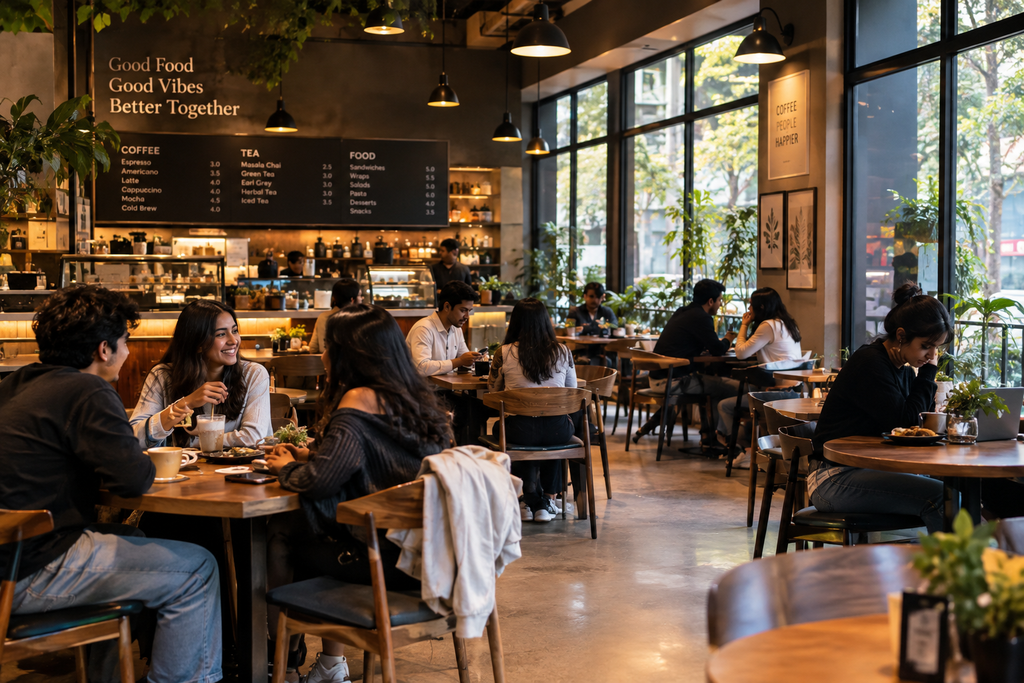
A customer might photograph:
- Their coffee
- A beautifully presented dessert
- A unique wall
- Café signage
- Their table setup
- Interior lighting
- A mirror selfie
- Friends enjoying their time together
- A visually attractive food platter
When customers share these moments, the café can receive exposure without relying entirely on traditional advertising.
This creates a powerful cycle:
Beautiful environment → customer takes photo → content is shared → others discover the café → new customers visit → more content is created.
For a café owner, this can make good design an important marketing asset.
3. Aesthetic Cafés Help Gen Z Express Their Identity
Gen Z often uses fashion, music, technology, travel, food, and social media to express personality and identity.
The places they visit can become part of that identity.
Someone who loves minimalism may prefer a clean, modern café. Someone interested in vintage culture may enjoy a retro café. Someone who loves nature might choose a café filled with plants and natural materials.
In this way, choosing a café can become similar to choosing an outfit.
The café communicates something about the person visiting it.
A person may think:
“This place feels like me.”
That emotional connection can encourage repeat visits.
For cafés, this means that developing a recognizable visual identity can be extremely valuable. A distinctive color palette, interior style, logo, packaging, furniture, and photography style can help a café become recognizable.
4. Iinstagram.comHomenstagram-Worthy Interiors Create Free Marketing
Aesthetic design can turn customers into informal brand promoters.
Imagine two cafés offering similar coffee at similar prices.
The first café has basic furniture, ordinary lighting, and little visual identity.
The second café has beautiful interiors, carefully designed tables, attractive cups, interesting artwork, and a memorable entrance.
Which café is more likely to appear in someone’s Instagram story?
Usually, the second one.
This does not mean that aesthetics can replace food quality or service. They cannot. But when the core product and service are good, an attractive environment can encourage customers to create and share content.
A single customer posting a café photo can introduce the business to hundreds or thousands of people.
That makes the café itself part of the marketing strategy.
5. Cafés Have Become Social Spaces
For many young people, cafés are places to spend time with others.
They may visit with:
- Friends
- Partners
- Classmates
- Colleagues
- Family members
- Online friends
- Business contacts
A café provides a comfortable middle ground between home and formal environments.
You can have a conversation without the formality of a restaurant. You can work without being completely isolated. You can meet someone without needing to invite them into your home.
This makes cafés especially attractive to younger consumers who value flexible social environments.
A good aesthetic café can make these interactions feel more enjoyable because the surroundings contribute to the mood.
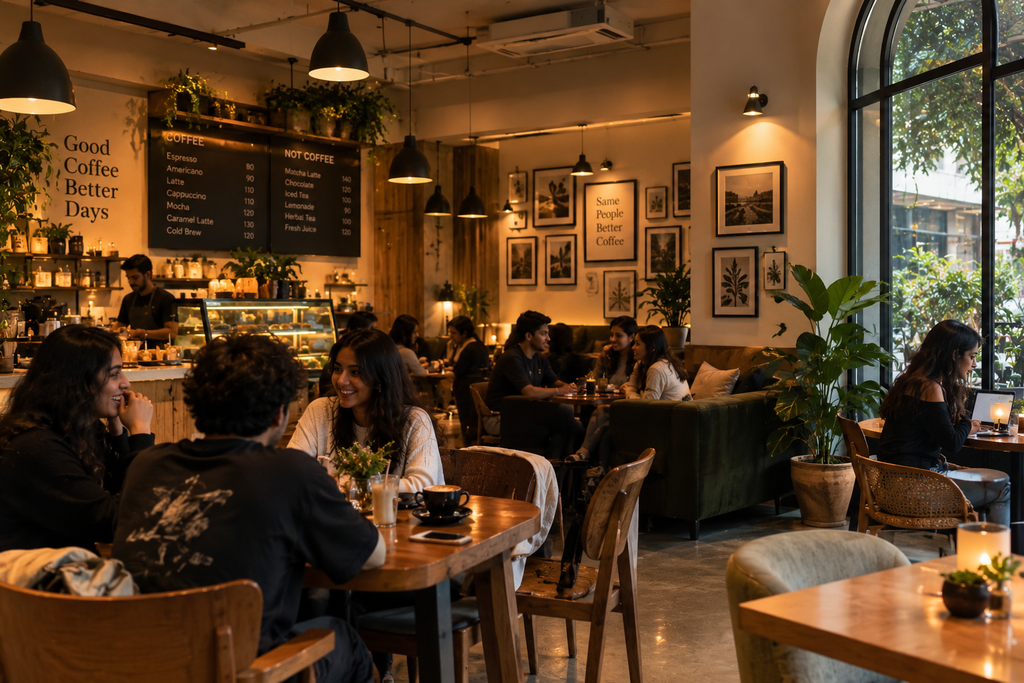
6. Cafés Are Popular Study and Work Locations
Another important factor is the rise of flexible work and study habits.
Students and young professionals increasingly look for environments where they can study, work, read, or use their laptops.
A café can provide:
- Wi-Fi
- Coffee
- Comfortable seating
- Background music
- Charging points
- Air conditioning
- A change of environment
- Food and beverages throughout the visit
The environment can also influence productivity.
Some people find the background activity of a café more motivating than working alone in a quiet room.
This has created a new café customer: the person who orders coffee and stays for several hours while studying or working.
For cafés, providing comfortable seating, reliable Wi-Fi, accessible charging points, and suitable lighting can make the space more attractive to this audience.
7. The “Third Place” Effect
Home is one place.
Work or college is another.
A café can become the third.
This concept is often described as a “third place”—a location outside home and work where people can relax, interact, and spend time.
Modern cafés can serve this role particularly well.
They provide a neutral environment where people can:
- Relax after college
- Meet friends
- Read
- Work
- Have a casual meeting
- Spend time alone
- Celebrate small occasions
For Gen Z, the café can therefore become part of their everyday lifestyle.
8. Food Presentation Matters More Than Ever
The experience does not stop at the interior.
Food and beverage presentation has become an important part of café culture.
A beautifully prepared latte, dessert, sandwich, mocktail, or breakfast plate can become content itself.
Details such as:
- Latte art
- Attractive plates
- Creative glassware
- Garnishes
- Branded cups
- Unique serving trays
- Interesting colors
- Creative desserts
can make a product more visually appealing.
This is particularly important because customers often see food through their phone cameras before they taste it.
However, visual presentation should support actual quality. A beautiful dish may attract the first visit, but taste, freshness, portion size, service, and consistency determine whether customers return.
9. Lighting Plays a Huge Role
Lighting is one of the most underestimated parts of café design.
Natural light can create a fresh and relaxing atmosphere. Warm lighting can make a space feel cozy and intimate. Carefully positioned decorative lighting can create interesting backgrounds for photographs.
For aesthetic cafés, lighting can affect both the customer’s experience and the content they create.
Poor lighting can make even a beautiful interior look ordinary in photographs.
Good lighting can make a simple corner feel special.
This is why many successful cafés carefully consider windows, pendant lights, table lamps, wall lighting, and decorative fixtures when designing their interiors.
10. Gen Z Loves Discovering New Places
Another reason aesthetic cafés are popular is the culture of discovery.
There is excitement in finding a café that friends have not visited yet.
People may discover new cafés through:
- TikTok
- Google search
- YouTube
- Food bloggers
- Influencers
- Friends
- Online reviews
- Local recommendation pages
The discovery itself becomes part of the experience.
A café with a distinctive identity can stand out among hundreds of ordinary cafés.
This is especially important in competitive cities where customers have many options.
11. Aesthetic Cafés Create Shareable Moments
People often remember experiences through moments.
A birthday celebration.
A first date.
A conversation with friends.
A graduation.
A weekend coffee.
A quiet afternoon alone.
Aesthetic cafés provide visual environments where these moments can be captured.
A photograph taken inside a beautiful café is not just a photograph of the café. It can represent a memory.
That emotional association can make the customer feel more connected to the place.
This is one reason café branding should focus on more than products.
The goal is not only:
“Come and drink coffee.”
It can become:
“Come and create a moment.”
12. The Rise of “Instagrammable” Businesses
The term “Instagrammable” became popular because businesses realized that customers could help promote them through social media.
Cafés are particularly suitable for this because they naturally contain many visual elements.
A café can create recognizable photo opportunities through:
- Statement walls
- Neon signs
- Unique furniture
- Large mirrors
- Artistic ceilings
- Flower arrangements
- Interesting table settings
- Signature drinks
- Branded packaging
- Beautiful entrances
The important thing is not to copy every trend.
A café should develop its own identity.
A distinctive design is more memorable than a space that simply follows whatever style is currently popular.
13. Personalization Makes Customers Feel Special
Gen Z customers also appreciate experiences that feel personal.
Small details can make a difference.
For example:
A personalized message on a dessert plate.
A thoughtfully designed menu.
Friendly staff.
A signature drink.
A customized celebration setup.
A memorable takeaway cup.
These details communicate that the café cares about the customer’s experience.
In hospitality, small moments of thoughtful service can have a significant impact on customer perception.
A beautiful café may attract someone once.
A beautiful café combined with excellent hospitality gives them a reason to return.
14. Sustainability Can Add More Meaning
Many younger consumers are increasingly interested in how products are made and where they come from.
For cafés, sustainability can become part of the overall brand experience.
Examples include:
- Reducing unnecessary plastic
- Using reusable or recyclable packaging
- Minimizing food waste
- Using locally sourced ingredients where practical
- Choosing durable furniture
- Offering reusable alternatives
- Communicating sourcing information clearly
However, sustainability should be genuine rather than simply a marketing slogan.
Customers are increasingly able to research brands, read reviews, and compare claims.
A café that communicates honestly about its practices can build greater trust.
15. Aesthetic Cafés Can Create a Strong Brand
A café is not only a physical location.
It can become a brand.
Consider how customers recognize certain businesses from a logo, color, packaging style, or interior design before they even see the name.
Strong café branding can include:
Logo + colors + typography + interiors + menu + packaging + staff presentation + photography + social media.
When all these elements communicate the same personality, the café becomes easier to remember.
For example, a luxury café might use elegant typography, premium materials, warm lighting, sophisticated packaging, and refined photography.
A youthful café might use bold graphics, playful colors, creative drinks, and energetic social media content.
The design should match the audience.
16. Reviews and Recommendations Influence Decisions
Before visiting a café, many customers look at online reviews and photographs.
They want to know:
- Is the food good?
- Is the café clean?
- Is the atmosphere comfortable?
- Is the service friendly?
- Is the price reasonable?
- Does the café look like the photos?
- Is it suitable for groups?
- Is parking available?
- Is it good for working or studying?
This is why a café cannot depend on aesthetics alone.
A beautiful interior may attract attention, but poor service or disappointing food can quickly damage the customer experience.
The strongest cafés combine visual appeal with consistent quality.
17. Why Aesthetic Cafés Are Especially Powerful for Gen Z
When all these factors are combined, the popularity becomes easier to understand.
Gen Z does not necessarily see a café as simply a place where a transaction happens.
It can be:
A restaurant.
A workspace.
A social space.
A photography location.
A content backdrop.
A meeting place.
A study environment.
A date location.
A place to relax.
A place to express personal style.
That combination makes aesthetic cafés extremely relevant to modern lifestyles.
What Makes an Aesthetic Café Successful?
Creating an aesthetic café is not simply about buying expensive furniture or painting the walls a trendy color.
A successful café should consider the complete customer journey.
1. Strong Visual Identity
Choose a clear design direction and maintain it throughout the café.
2. Comfortable Seating
Beautiful furniture is not useful if customers cannot comfortably sit for 30 minutes or longer.
3. Quality Food and Drinks
The visual experience should be supported by products customers genuinely enjoy.
4. Excellent Hospitality
Polite, attentive, and professional service can turn first-time visitors into regular customers.
5. Cleanliness
Aesthetic design loses its impact when tables, floors, bathrooms, or service areas are poorly maintained.
6. Good Lighting
Use lighting to create atmosphere while also considering how the space appears in photographs.
7. Shareable Details
Create a few memorable visual elements rather than filling every corner with decorations.
8. Consistent Branding
Your logo, menu, packaging, social media, and interior should feel like parts of the same brand.
9. Social Media Presence
High-quality photographs and short-form videos can help potential customers discover the café.
10. Consistent Experience
The café should deliver what its online presence promises.
The Future of Aesthetic Café Culture
The café industry will continue to evolve as customer expectations change.
Future cafés may become even more experience-focused, combining hospitality with technology, design, entertainment, community, and personalization.
Customers may increasingly expect cafés to offer spaces for different purposes:
Work + food + socializing + relaxation + content creation.
However, trends will change.
Today’s popular interior style may eventually become outdated.
The cafés most likely to remain successful are those that understand the fundamental reason people visit: they want good products, comfortable environments, positive interactions, and memorable experiences.
Aesthetic design is the attraction.
Quality and hospitality are what create loyalty.
Final Thoughts
Aesthetic cafés are popular with Gen Z because they fit naturally into the way this generation socializes, works, creates content, discovers businesses, and expresses identity.
A beautiful interior can attract attention. A photogenic drink can generate social media content. A comfortable environment can encourage customers to stay longer. A distinctive brand can create recognition. Excellent food and service can turn visitors into regular customers.
The most successful aesthetic cafés understand that customers are not simply buying coffee.
They are buying an experience.
And when that experience is beautiful, comfortable, authentic, and memorable, people are much more likely to photograph it, share it, talk about it, and come back.
That is the real power behind the modern aesthetic café.
Aesthetic attracts. Experience connects. Quality builds trust. Hospitality creates loyalty.
